
Trends in Sport and Corporate Responsibility: A Comprehensive Report
1/27/20265 min read
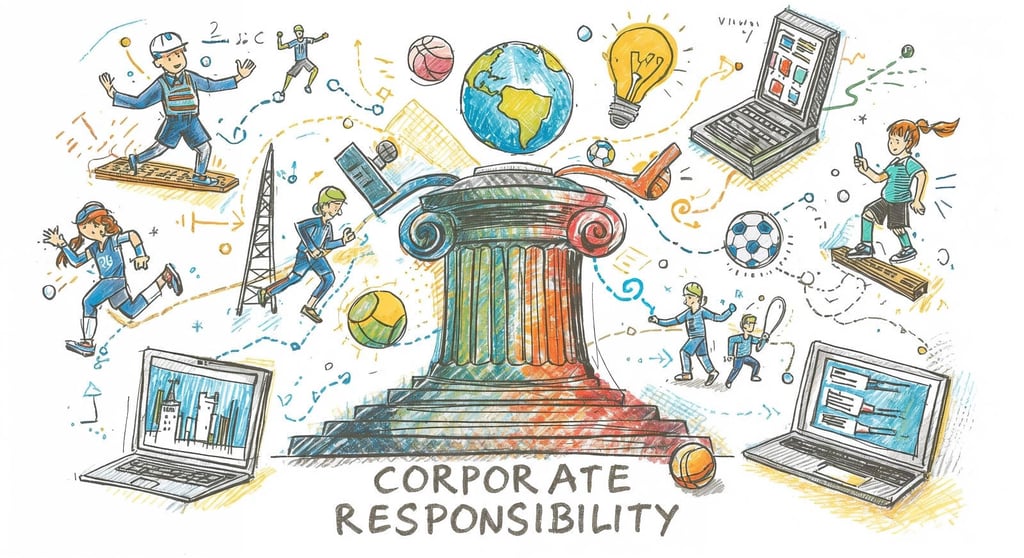
The intersection of sport and corporate responsibility (CR) is a rapidly evolving landscape, driven by increasing stakeholder expectations, technological advancements, and a growing recognition of sport's societal influence. This report details the most significant advancements, emerging technologies, and key players shaping this critical area.
I. Sustainability as a Core Pillar of Corporate Responsibility
Sustainability has become a paramount concern in the sports industry, with organizations increasingly adopting eco-friendly practices across their operations. The focus is on minimizing environmental impact, promoting resource efficiency, and contributing to a greener future.
Significant Advancements and Initiatives:
Eco-friendly Facilities and Infrastructure:
Energy-Efficient Stadiums: New stadium constructions and retrofits prioritize designs that reduce energy consumption, often incorporating advanced insulation, natural ventilation, and smart building management systems.
Renewable Energy Sources: A significant shift towards solar panels, wind turbines, and other renewable energy solutions to power stadiums, training facilities, and events.
LEED Certification: Many new and renovated sports venues are pursuing Leadership in Energy and Environmental Design (LEED) certification, a globally recognized symbol of sustainability achievement.
Waste Reduction and Circular Economy:
Zero-Waste Initiatives: Teams and leagues are implementing comprehensive waste management strategies aimed at diverting as much waste as possible from landfills through extensive recycling programs, composting, and reducing single-use plastics.
Plastic Reduction: Specific campaigns and policies to eliminate or significantly reduce single-use plastics in venues, from concessions to merchandise.
Sustainable Sourcing: Prioritizing environmentally friendly and ethically sourced materials for construction, merchandise, and food services.
Water Conservation:
Water-Efficient Fixtures: Installation of low-flow toilets, urinals, and faucets in facilities.
Smart Irrigation Systems: Utilizing technology for efficient watering of playing fields and surrounding landscapes, often based on real-time weather data.
Carbon Neutrality and Offsetting:
Carbon Neutral Event Management: Strategies to measure, reduce, and offset the carbon footprint of sporting events, including transportation, energy use, and waste.
Fan Engagement for Carbon Footprint Reduction: Developing tools and initiatives that allow fans to offset their travel emissions or participate in green programs.
Emerging Technologies Driving Sustainability:
Automated Facilities Management Systems: Utilizing IoT sensors and AI to optimize energy consumption, lighting, HVAC, and water usage in real-time, leading to significant efficiency gains.
Smart Grids and Energy Storage: Integration with smart energy grids and advanced battery storage solutions to manage renewable energy more effectively and reduce reliance on traditional power sources.
Advanced Recycling and Composting Technologies: Innovations in waste processing that make recycling more efficient and enable broader material recovery.
Sustainable Materials Science: Development of new, high-performance, and environmentally friendly materials for construction, apparel, and equipment (e.g., bio-based plastics, recycled composites).
Key Players in Sports Sustainability:
Professional Sports Leagues and Teams: Many major leagues (e.g., NBA, NFL, MLB, Premier League) and individual teams have launched extensive sustainability programs.
Green Sports Alliance: A leading non-profit organization that helps sports teams, venues, and leagues enhance their environmental performance.
Material Science Companies: Companies like Dow are providing innovative and sustainable materials for stadium construction and equipment.
Technology Providers: Companies specializing in smart building management, renewable energy solutions, and waste management technologies.
II. Social Responsibility, Diversity, Equity, and Inclusion (DEI)
Sports organizations are increasingly recognizing their powerful platform to drive positive social change, foster inclusive communities, and address systemic inequalities. Social responsibility initiatives extend beyond philanthropy to encompass genuine efforts in diversity, equity, and inclusion.
Significant Advancements and Initiatives:
Community Engagement and Outreach:
Youth Development Programs: Investment in sports programs for underprivileged youth, focusing on skill development, education, and life lessons.
Health and Wellness Initiatives: Promoting active lifestyles, healthy eating, and mental well-being within local communities.
Local Partnerships: Collaborations with local charities, schools, and non-profits to address specific community needs.
Diversity, Equity, and Inclusion (DEI):
Inclusive Programming: Developing sports programs and events that are accessible to people of all backgrounds, abilities, genders, and ethnicities. This includes adaptive sports, women's sports initiatives, and programs for marginalized groups.
Representation and Leadership: Efforts to increase diversity in leadership roles, coaching staff, and front office positions across sports organizations.
Anti-Discrimination Campaigns: Using the sport's platform to speak out against racism, sexism, homophobia, and other forms of discrimination, promoting messages of unity and respect.
Employee Volunteering: Encouraging and facilitating employee participation in community service and social impact programs.
Ethical Supply Chains and Human Rights:
Responsible Sourcing: Ensuring that merchandise, apparel, and equipment are produced under ethical labor conditions, free from exploitation.
Athlete Welfare: Prioritizing the mental and physical well-being of athletes, including concussion protocols, mental health support, and career transition programs.
Emerging Technologies and Social Responsibility:
Digital Platforms for Community Engagement: Using social media, dedicated apps, and online portals to connect with communities, facilitate participation in programs, and gather feedback.
Data Analytics for Social Impact Measurement: Employing data to track the effectiveness and reach of social responsibility programs, allowing for evidence-based decision-making and continuous improvement.
VR/AR for Empathy and Education: Virtual and augmented reality experiences can be used to educate athletes, staff, and fans on DEI issues, promoting empathy and understanding.
Key Players in Social Responsibility:
Sports Philanthropy Network: A resource for individuals and organizations involved in sports philanthropy.
Professional Sports Leagues and Player Associations: Many leagues (e.g., NBA's "NBA Cares," NFL's "Play 60") and player associations have significant social impact initiatives.
Youth Sports Organizations: Non-profits and community groups focused on providing access to sports for all youth.
Consulting Firms: Firms like PwC, Deloitte, and Capgemini provide strategic advice on developing and implementing robust CSR and DEI strategies in sports.
III. Technology Integration for Enhanced Corporate Responsibility
Technology is not only revolutionizing athletic performance and fan engagement but also acting as a powerful enabler for corporate responsibility efforts, driving efficiency, transparency, and innovation.
Significant Advancements and Emerging Technologies:
Data Analytics and AI for Performance and Wellness:
Athlete Performance Tracking: Wearable technology, GPS tracking, and advanced sensors collect vast amounts of biometric and performance data. AI and machine learning algorithms analyze this data to optimize training, prevent injuries, and enhance athlete well-being – a critical aspect of social responsibility towards athletes.
Personalized Fan Experiences: AI is used to personalize content, offers, and interactions for fans, fostering stronger community bonds and engagement.
AI for Scouting and Development: AI-driven tools can help identify talent and personalize development pathways, potentially reducing biases in selection processes.
Immersive Technologies (VR/AR) for Training and Fan Engagement:
VR Training: Athletes use virtual reality for tactical training, skill development, and injury rehabilitation in controlled, safe environments. This can reduce resource consumption associated with traditional training methods and improve safety.
AR Enhanced Fan Experiences: Augmented reality overlays information onto live events or enhances stadium experiences, offering new ways for fans to engage with sustainability and social initiatives (e.g., visualizing a stadium's energy consumption).
Blockchain for Transparency and Ethical Sourcing:
Supply Chain Traceability: Blockchain technology can provide immutable records of supply chains, ensuring ethical sourcing of materials and fair labor practices for sports merchandise and equipment.
Ticketing and Anti-Scalping: Secure blockchain-based ticketing can combat fraudulent tickets and ensure fair pricing.
IoT and Smart Stadiums:
Sensor Networks: IoT devices monitor everything from crowd flow and security to waste levels and environmental conditions within venues, allowing for real-time adjustments and efficiency improvements in areas like energy and waste management.
Predictive Maintenance: AI-driven systems predict equipment failures, reducing downtime and optimizing resource use.
Digital Platforms for Stakeholder Engagement:
Sustainability Dashboards: Online platforms that track and display an organization's environmental performance, providing transparency to fans and stakeholders.
Interactive Fan Apps: Mobile applications that integrate sustainability challenges, community voting for charitable causes, and educational content.
Key Players in Sports Technology for CR:
Sports Tech Startups: A multitude of startups are innovating in areas like athlete performance, fan engagement, and smart venue management.
Major Tech Companies: Companies like Google, Amazon, Microsoft, and IBM are providing cloud computing, AI, and data analytics solutions that are leveraged by sports organizations.
Wearable Technology Manufacturers: Companies producing smartwatches, fitness trackers, and specialized athlete monitoring devices.
Consulting and Advisory Firms: Deloitte, PwC, and Capgemini are at the forefront of researching and advising sports organizations on digital transformation and the integration of emerging technologies for CR.
Conclusion
The trends in sport and corporate responsibility demonstrate a clear trajectory towards more sustainable, socially conscious, and technologically advanced practices. From constructing eco-friendly stadiums and implementing zero-waste initiatives to fostering inclusive communities through DEI programs and leveraging AI for athlete welfare and fan engagement, the sports industry is embracing its role as a powerful agent for positive change. The continuous development and integration of emerging technologies will further amplify these efforts, driving greater transparency, efficiency, and impact in the years to come. The future of sport and corporate responsibility is one of integrated action, where ethical practices and innovation are inextricably linked to success both on and off the field.